Learning project finance modelling is the gateway to a career in project finance in infrastructure, renewable energy, banking and corporate finance, by building practical project finance modelling skills in financial forecasting, project evaluation, cash flow analysis, debt structuring and investment decision-making. These technical skills are readily translatable between sectors for financing large-scale, long-term capital investment projects.
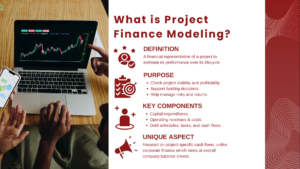
What Is Project Finance Modeling?
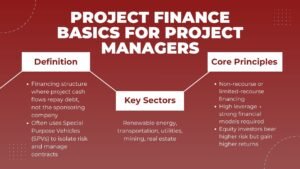
Project finance modeling is the preparation of a financial model that considers the financing of a specific capital project, usually financed with a high proportion of debt financing, where project cash flows will be used as collateral. It is an integrated model that integrates forecasting, debt analysis, and investment appraisal.
These models are somewhat different from the standard corporate models as they deal with the life cycle of a given project from construction to operation rather than a continuous enterprise. For a solar farm project model, for instance, you need to take into consideration the construction and revenue-free stage, then decades of consistent operating cash flow.
Why Is Project Finance Modeling Valuable for Finance Careers?
The value of project finance modeling is that it is a blend of technical skills in Excel and commercial sense that banks, infrastructure, and corporate finance are looking for. Experts with the ability to create and interpret these models can better assist in making high-value investment decisions.
A career in project finance modelling also often has good progression for the future, as the skills are transferable to a variety of industries and types of deals. People who begin their career in one area, like renewable energy, can often bring their skills in modeling to an infrastructure or utilities finance position.
Which Industries Hire Project Finance Modeling Professionals?
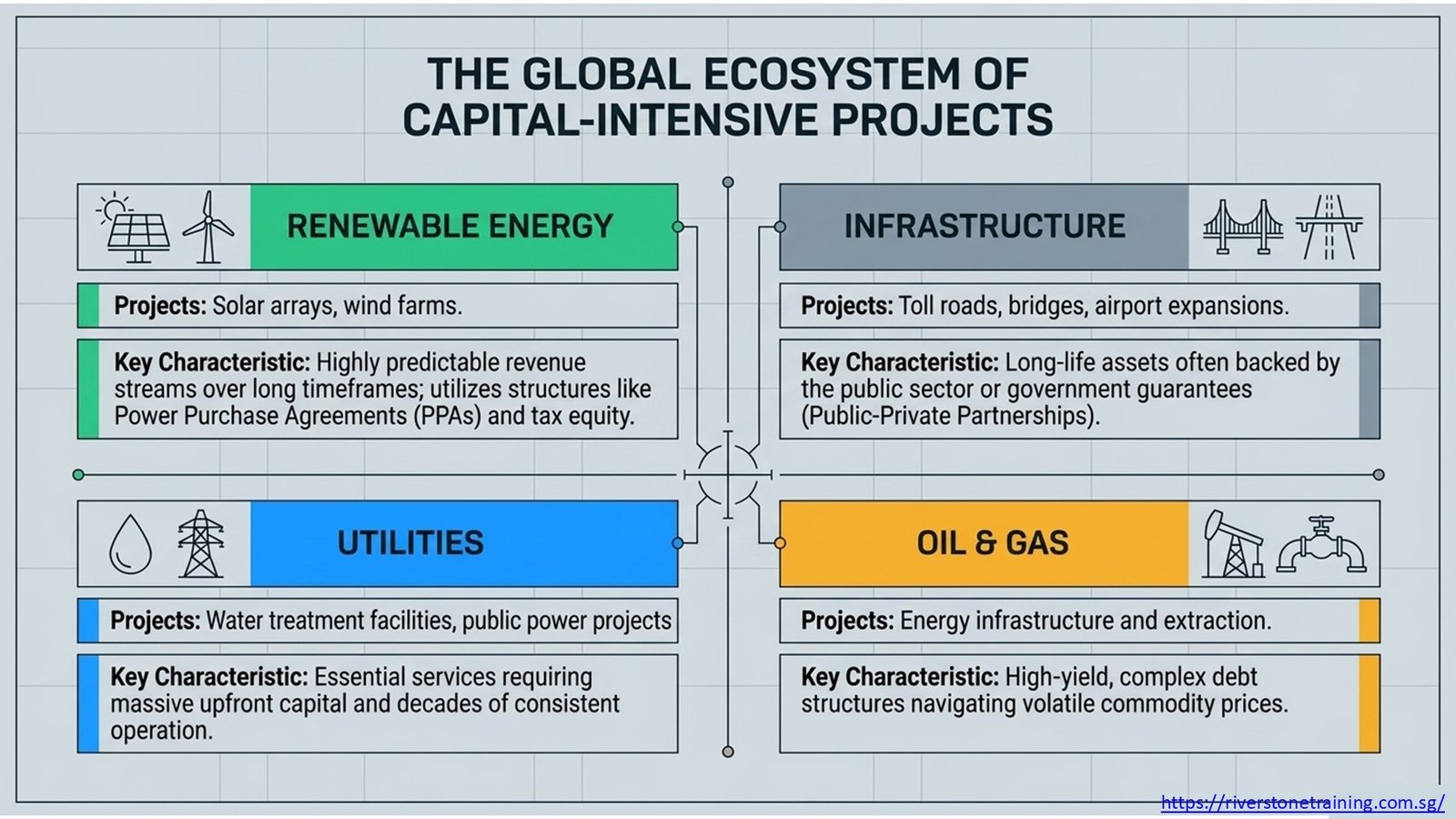
The top industries that employ project finance modeling experts are renewable energy, infrastructure, utilities, and oil and gas, all of which involve large-scale, capital-intensive projects that are funded by structured debt financing. These professionals also work in commercial and investment banks, assessing loan applications.
Demand for this skill set is further increased by government and public-private partnership projects, like toll roads or public utilities. The very same competency in modeling is essential for a financial consultant to a public transport expansion as is required for an analyst dealing with a private wind farm.
The table below outlines common industries and the typical projects they finance:
| Industry | Typical Projects |
| Renewable Energy | Solar and wind farms |
| Infrastructure | Roads, bridges, airports |
| Utilities | Water and power projects |
| Oil & Gas | Energy infrastructure |
What Does a Project Finance Analyst Do?
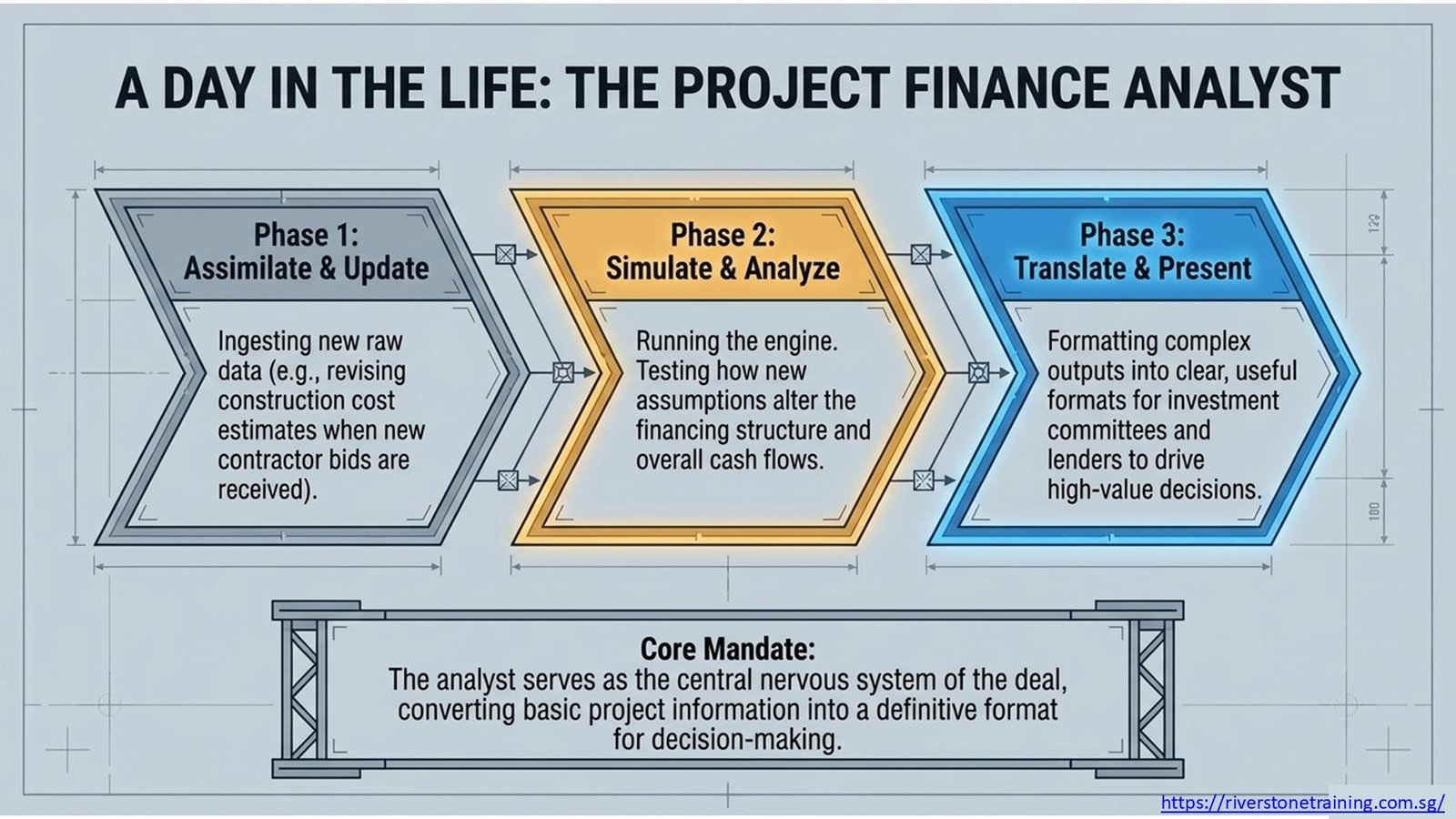
A project finance analyst prepares and maintains financial models that predict the cash flows of a project, that analyse the financing structure of a project, and that inform investment or lending decisions. This position is central to most project finance agreements, making sense of the basic project information and presenting it in a useful format for decision-making.
On a day-to-day basis, it would often involve updating the assumptions as they change, conducting scenario analysis, and creating outputs for investment committees or lenders for the project. In a construction project, for instance, an analyst could revise the construction cost estimates several times when bids from contractors have been received.
The table below summarizes common career paths that build on project finance modeling skills:
| Career | Primary Responsibility |
| Project Finance Analyst | Build and analyze financial models |
| Investment Banking Analyst | Evaluate project investments |
| Infrastructure Finance Analyst | Assess large capital projects |
| Corporate Finance Manager | Support strategic investment decisions |
How Does Cash Flow Modeling Support Investment Decisions?
Cash flow modeling helps with investment decisions. Cash flow modeling helps to convert the expected income and expenditure of a project into figures that can be directly analyzed by the investors and lenders, such as NPV and IRR. A well-built project finance model cash flow projection lets stakeholders see exactly how project revenues flow through operating costs, debt repayments, and equity returns.
A key aspect of these forecasts is that lenders use them to determine if a project could be able to meet its debt obligations, typically by using a DSCR. In a downside situation, a cash flow model with a DSCR that is lower than a lender’s minimum might indicate the need to make adjustments to the financing.
Why Is Debt Structuring Important in Project Finance?
Debt structuring is relevant because the majority of project finance transactions involve significant amounts of debt financing, and the terms of the debt will directly influence the project returns and the allocation of project risk. Analysts should be able to simulate different debt arrangements such as repayment timing and interest rates on the project’s overall economics.
Unstructured debt can make a project susceptible to cash flow shortfalls in down operating seasons. A poorly structured deal, by contrast, fails to provide for buffer accounts or flexibility of repayment that can safeguard both the lender and equity investors from short-term underperformance.
How Do Infrastructure Projects Use Financial Models?
Financial models are employed during infrastructure projects to determine whether the capital investment, e.g. toll roads, airports, etc., is worth financing in the long term and for the parties involved, and whether it will provide sufficient returns given its cost. The length of the models is usually decades because of the long-life of infrastructure assets.
Infrastructure projects are frequently, if not always, funded by the public sector or backed by a governmental guarantee, so the models need to incorporate regulatory and political risks that would not arise in an entirely private transaction. For instance, an airport expansion model might have to consider passenger volume assumptions based on the overall economic outlook.
How Does Renewable Energy Finance Create Career Opportunities?
Renewable energy finance also opens up career prospects as the demand for renewable energy continues to rise across the world, and investment in solar, wind, and other renewable energy projects continues to grow, thereby driving up the demand for professionals who can accurately model the deals. They tend to have predictable revenue streams over a long time frame, which can be modeled with project finance methods.
There are several different ways to model renewable energy financing transactions, including power purchase agreements, tax equity structures, and construction financing. Renewable energy finance professionals often find themselves working on transactions that involve a variety of ways to model renewable energy financing, such as PPA, tax equity, and construction financing. For example, a knowledgeable analyst who masters strong modeling techniques on a solar project can be prepared to transition to wind, battery storage, or a larger financial infrastructure project.
What Technical Skills Do Employers Look For?
Employers are seeking well-developed skills in Excel modeling, knowledge of financial terms (NPV, IRR, DSCR), and analytical judgment for the interpretation of these figures and their meaning for project viability. Technical accuracy is necessary but not sufficient, without the ability to clearly explain results.
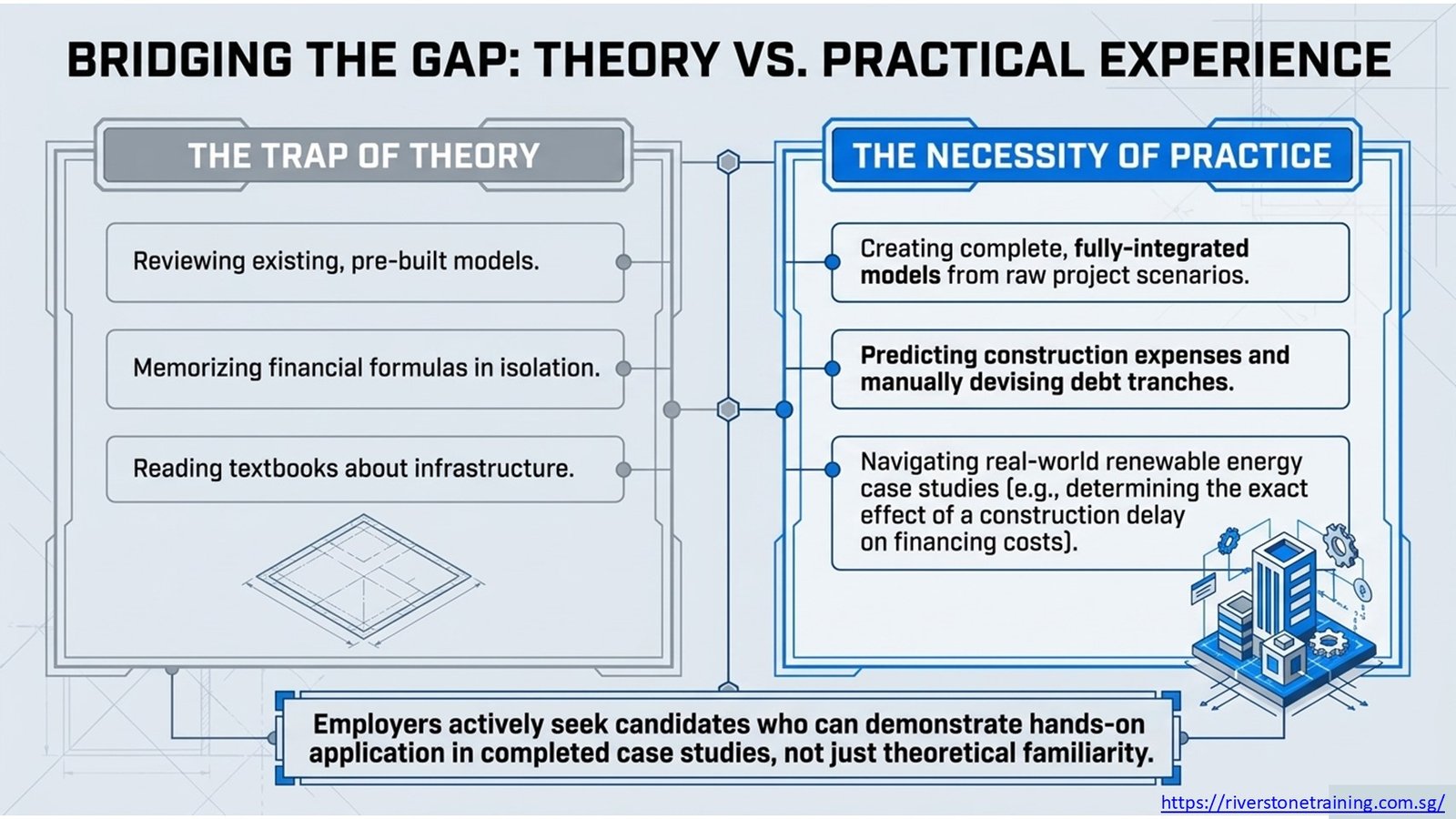
Employers also appreciate experience with scenario and sensitivity analysis, as real transactions involve running various scenarios and sensitivity tests before closing the financing. Applicants who are able to show this in completed case studies rise above the pack in recruitment.
Core technical skills valued in project finance roles are summarized below:
| Skill | Workplace Benefit |
| Financial Modeling | Evaluates project viability |
| Cash Flow Forecasting | Estimates future project performance |
| Debt Structuring | Optimizes financing strategies |
| Scenario Analysis | Assesses project risks |
How Do Project Finance Modeling Courses Build Practical Experience?
Project finance modelling courses emphasize hands-on practice by having learners create complete models from actual project scenarios instead of existing models. This involves predicting the expenses of construction, devising the debt tranches, and estimating the main investment metrics from the raw assumptions.
Learners are also introduced to the types of decisions that must be made during actual transactions through infrastructure or renewable energy case studies, such as determining the effect of a construction delay on financing costs. This hands-on application uses exercises to help develop confidence that can be directly carried over into work.
How Does Excel Support Project Finance Professionals?
For project finance professionals, Excel offers the platform that lenders and investors are looking for to review project assumptions and outputs, and it’s flexible and transparent. Analysts with proficient Excel skills can create accurate and auditable models.
In addition to formulas, the use of other advanced features, like the ability to include a circular reference for sizing the debt in the project finance model and structured error checking for identifying broken links, is common in project finance work. During due diligence, when several people are reading the same file, an analyst who has created an easily understood, well-documented model will save an immense amount of time.
What Common Challenges Do Project Finance Analysts Solve?
Project finance analysts typically are used to address the issues stemming from the uncertainty of construction schedules, commodity or energy price volatility, and arranging debt to meet both the requirements of the lender and the equity return requirements. These all need to be tested in the model with scenarios.
Analysts also solve regulatory or permitting issues that may impact a project’s timeline and cost assumptions. However, if there is a delay in permitting a renewable energy project, the analyst will need to model the costs of the project and the revenue that would not be collected for the delay.
How Can Professionals Progress Their Careers?
By successfully modelling transactions and over time moving into more complex structures, professionals can move forward in their career. A project finance modeling career often moves from analyst-level modeling work toward roles with greater deal structuring and client-facing responsibility.
Analysts with solid reputations for modelling typically transition into an associate or manager position, usually managing the construction of models, but not often constructing them themselves. Others switch to wider business finance or infrastructure advisory roles—where they use the same analytical toolkit but in a different area.
Core project finance responsibilities are outlined below:
| Responsibility | Purpose |
| Cash Flow Projection | Forecast project performance |
| Debt Analysis | Evaluate financing options |
| Investment Appraisal | Assess project feasibility |
| Risk Analysis | Identify project uncertainties |
Which Certifications and Skills Complement Project Finance Modeling?
Project finance modeling is complemented by skills in corporate finance, credit analysis, and other valuation techniques, which provide a broader perspective of how projects fit into wider investment portfolios. Structured modeling certifications add to a candidate’s profile as well.
Finance professionals who have experience with project finance modeling and have expertise in risk management or regulatory analysis are more likely to be suited for positions in infrastructure or public-private partnerships, where these aspects can be vital to transaction decisions.
Why Is Continuous Learning Important in Project Finance?
In project finance, the financing model and its terms and conditions change over time, especially in rapidly evolving industries such as renewable energy, so continuous learning is crucial. Those who fail to keep up to date with their skills may be left behind in the game of today’s deals.
Continuous access to fresh deals and deal types also helps broaden an analyst’s versatility in industries. Someone who regularly reviews new transaction structures will be more flexible and useful as project finance markets evolve to new industries like battery storage or green hydrogen.
The summary below brings together the core career-building elements of project finance modeling:
| Career Element | Why It Matters |
| Financial Modeling | Core technical foundation for all roles |
| Cash Flow Forecasting | Supports investment and financing decisions |
| Debt Structuring | Balances risk between lenders and investors |
| Industry Versatility | Opens roles across energy, infrastructure, banking |
| Continuous Learning | Keeps skills current as deal structures evolve |
Conclusion
Learning project finance modeling empowers practitioners for work in infrastructure finance, renewable energy, banking, and corporate finance, equipping them with hands-on experience in financial forecasting, project assessment, and investment analysis. These are the kinds of capabilities that enable the type of structured decision-making that’s necessary in large, capital-intensive projects.
The foundation for a project finance modeling career lies in analytical skills and proficiency in Excel modeling, which are essential for analyzing intricate projects and providing the financial information necessary for effective financing. Additionally, the ability to model the cash flows for a project can be crucial for assessing complex projects and conveying financial insights that can guide successful financing results. Hands-on Excel modeling, real-world case studies on project finance, and structured project finance modeling training will continue to be effective ways to enhance this expertise for long-term career development in this area.